Hi, my name is

Marlon.

Ph.D Student in Computer Vision & AI

Passionate about developing artificial intelligence models that uncover hidden patterns and insights within data.


About Me

I am a Ph.D. student in Computer Vision and Artificial Intelligence at the Autonomous University of Madrid (UAM), where I conduct research at the Video Processing and Understanding Lab (VPULab). My current work focuses on Open-World Semantic Segmentation for Driving Scenes, with an emphasis on Unsupervised Domain Adaptation (UDA) and Self-Supervised Learning (SSL).

I hold a Master’s degree in Data Science from UAM, where my research addressed challenges in Multimodal Extreme Multi-Label Classification (XMC) under resource constraints. My Master’s thesis proposed a transformer-based multimodal architecture that fuses visual and textual information at the token level, achieving state-of-the-art performance on large-scale benchmarks while remaining computationally efficient. I also earned a Bachelor’s degree in Computer Science Engineering from Universidad San Francisco de Quito, where my undergraduate thesis focused on applying machine learning techniques to network optimization problems.

Previously, I worked as a Data Analytics Officer at Banco Solidario S.A., leading data-driven initiatives for customer segmentation, risk assessment, and sales optimization. I developed and deployed machine learning models that improved business decision-making, increased customer acquisition efficiency, and supported operational improvements through actionable insights.

My technical expertise includes Transformer-based architectures, Vision-Language Models, and contrastive learning methods, applied across Computer Vision, Natural Language Processing, Semantic Segmentation, and Recommendation Systems. I have extensive hands-on experience building scalable machine learning pipelines using modern research and production tools, with a strong focus on reproducibility, efficiency, and empirical evaluation.

Here are a few technologies I've been working with recently:

  • Python, R, SQL
  • PyTorch, Hugging Face, Scikit-Learn
  • Computer Vision & NLP (Semantic Segmentation, Vision-Language Models)
  • Transformer Architectures (ViT, BERT, CLIP-style models)
  • Data Processing (NumPy, Pandas / Polars)
  • Git, LaTeX

Education

Universidad Autónoma de Madrid (UAM)
Ph.D. Student in Computer Vision and AI
Universidad Autónoma de Madrid (UAM)
Nov 2025 - Present

Video Processing and Understanding Lab (VPULap)

Advisors:

  • Dr. Juan Carlos San Miguel Avedillo.
  • Dr. Fernando Díaz de María.

Thesis: Open-World Semantic Segmentation for Driving Scenes.

Universidad Autónoma de Madrid (UAM)
Master's Degree in Data Science
Universidad Autónoma de Madrid (UAM)
Sep 2023 - Feb 2025
GPA: 8.03 out of 10

Master’s Thesis: Multimodal Extreme Multi-Label Classification Under Resource Limitations (Grade: 9.5/10).

  • Developed a novel, resource-efficient multimodal architecture for Extreme Multi-Label Classification (XMC), integrating text and image modalities using an early fusion model based on transformers. The proposed architecture remains compatible with state-of-the-art XMC methods such as DEXA and NGAME, enhancing classification performance while ensuring computational efficiency and scalability. Extensive experiments on the MM-AmazonTitles-300K benchmark demonstrated that our approach outperforms existing methods, setting a new state-of-the-art in multimodal XMC.

Extracurricular Activities:

  • Delegate of the Master’s Degree in Data Science.
Relevant coursework:
  • Advanced Methods in Machine Learning.
  • Advanced Methods in Statistics.
  • Deep Learning for Biometric Information Processing.
  • Deep Learning for Signal Processing Image and Video.
  • Large-Scale Data Processing.
  • Natural Language Processing (NLP).
  • Reinforcement Learning.
  • Temporal Information Processing.
  • Unstructured Information.
  • Data Management.
Universidad San Francisco de Quito (USFQ)
Bachelor’s Degree in Computer Science Engineering
Universidad San Francisco de Quito (USFQ)
Aug 2017 - Jun 2021
GPA: 2.94 out of 4

Degree Thesis: Path Planning Optimization in SDN Using Machine Learning Techniques (Grade: A).

  • Developed a machine learning-based approach to optimize path planning in Software-Defined Networks (SDN), improving network QoS. Formulated path selection as a multi-class classification problem and evaluated multiple classifiers. The best-performing model, a support vector machine, outperformed alternative methods
  • Published in the 2021 IEEE Fifth Ecuador Technical Chapters Meeting (ETCM) https://ieeexplore.ieee.org/document/9590749.
Relevant coursework:
  • Artificial Intelligence.
  • Calculus (I, II and III).
  • Data Structures and Algorithms.
  • Data Mining.
  • Databases.
  • Linear Algebra.
  • Programming (I, II and III).
  • Probability and Statistics.
  • Systems Design.
  • Projects: Management and Analysis.

Research Experience

Video Processing and Understanding Lab (VPULab)
Ph.D. Researcher
Video Processing and Understanding Lab (VPULab)
Nov 2025 - Present
  • Conducting early-stage research on Unsupervised Domain Adaptation (UDA) and Self-Supervised Learning (SSL) for semantic segmentation in driving scenes.
  • Studying and adapting SSL-based loss functions to improve domain alignment and enhance spatial feature consistency across domains.
  • Performing literature review and experimental analysis to integrate consistency-based regularization within UDA frameworks such as DAFormer.

Experience

Banco Solidario S.A.
Data Analytics Officer
Banco Solidario S.A.
Jan 2022 - Ago 2023
  • Increased the balance in savings accounts by USD 200,000 by identifying over 38,000 potential clients who increased their balance by more than USD 260 through the implementation of an XGBoost model, with 7% of them achieving this increase.
  • Led and work closely with product owners to develop successful projects, communicating findings and results clearly and effectively to non-technical audiences.
Banco Solidario S.A.
Data Analytics Technician
Banco Solidario S.A.
Jul 2021 - Dic 2021
  • Increased the number of downloads of Banco Solidario’s mobile app by 30% and reduced the cost per download by 22% by implementing a Random Forest model to identify potential customers for digitalization, also improving customer segmentation.
  • Enhanced customer experience and boost sales by developing an interactive dashboard to monitor the sales and service times for commercial advisors at Banco Solidario, enabling targeted actions at each branch.

Publications

The 40th Annual AAAI Conference on Artificial Intelligence (AAAI)
Large Language Models Meet Extreme Multi-label Classification: Scaling and Multi-modal Framework
The 40th Annual AAAI Conference on Artificial Intelligence (AAAI)
Diego Ortego, Marlon Rodríguez, Mario Almagro, Kunal Dahiya, David Jiménez, Juan C. SanMiguel
Jan 2026
This research was performed in collaboration with researchers from NielsenIQ and the Indian Institute of Technology (IIT) Delhi.
IEEE Fifth Ecuador Technical Chapters Meeting (ETCM)
Path Planning Optimization in SDN Using Machine Learning Techniques
IEEE Fifth Ecuador Technical Chapters Meeting (ETCM)
Marlon Rodríguez, Ricardo Flores Moyano, Noel Pérez, Daniel Riofrío, Diego Benítez
Oct 2021

Achievements

PhD Funding – Community of Madrid
Selected through a competitive public call as PDI (Personal Docente e Investigador) – Titulado Superior for the project Improved Deep Learning for Computer Vision, fully funded by the Community of Madrid.
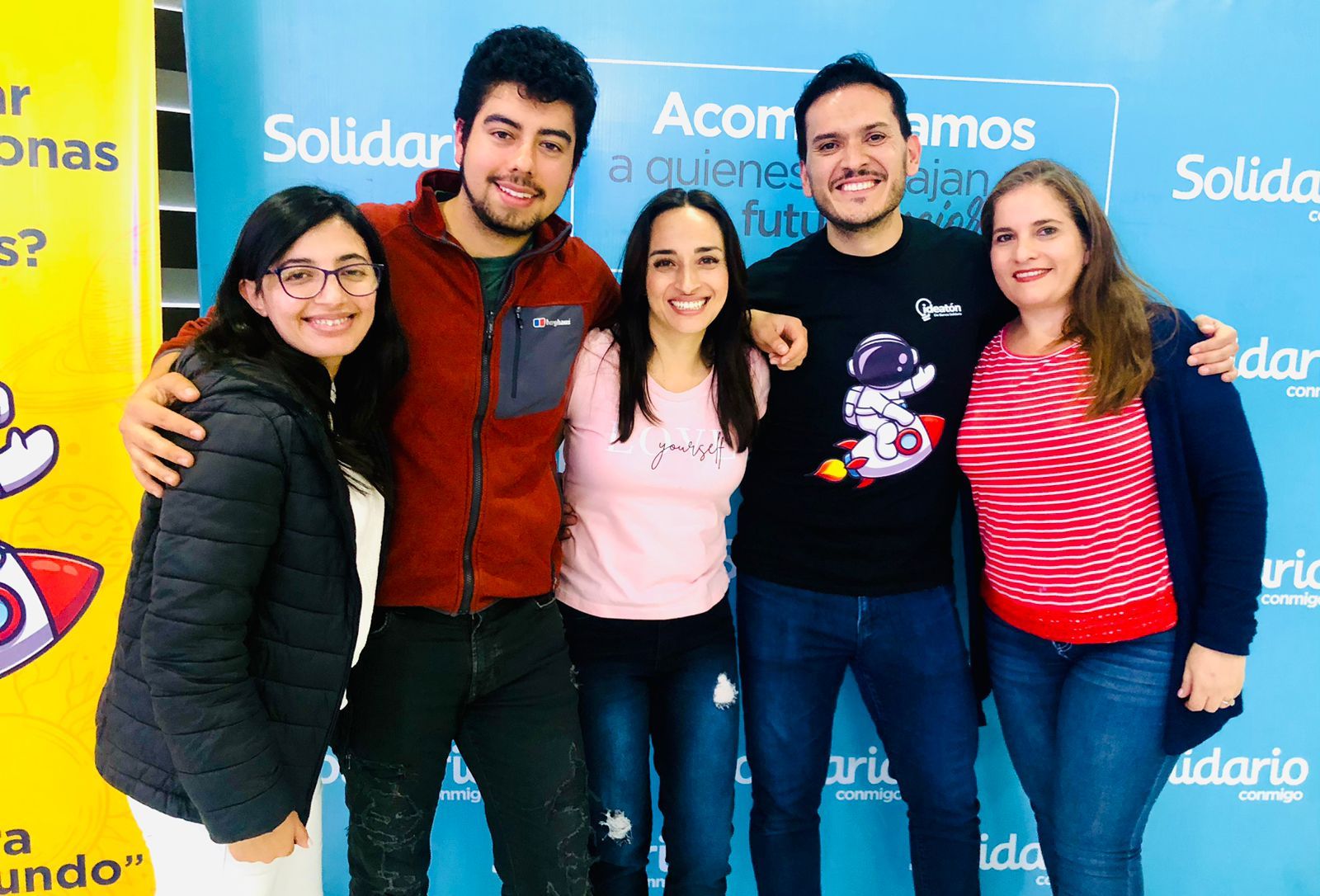
Ideatón 2023 of BANCO SOLIDARIO S.A.
We achieved second place for the solution proposed to a strategic challenge of the bank.

Relevant Projects

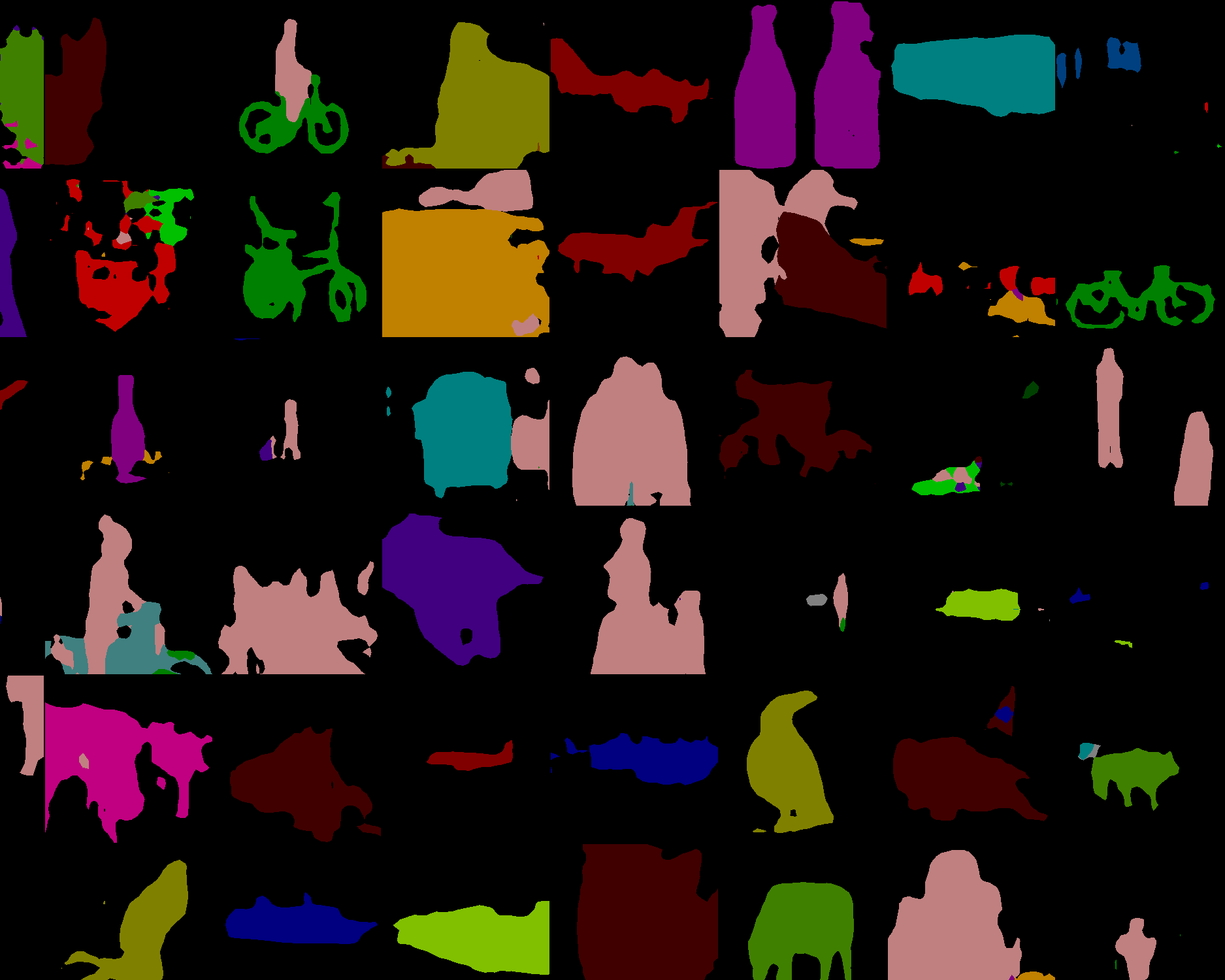
Image Segmentation with U-Net and DeepLabV3 on CUB-200-2011 and Pascal VOC2012
Python PyTorch Torchvision Semantic Segmentation Albumentations Computer Vision
Image Segmentation with U-Net and DeepLabV3 on CUB-200-2011 and Pascal VOC2012
This project explores semantic segmentation on CUB-200-2011 and Pascal VOC 2012 using U-Net and DeepLabV3 with PyTorch, combining data augmentation, class balancing, and hybrid loss functions.
Gradient Boosting Implementation
Python Scikit-learn Machine Learning (ML)
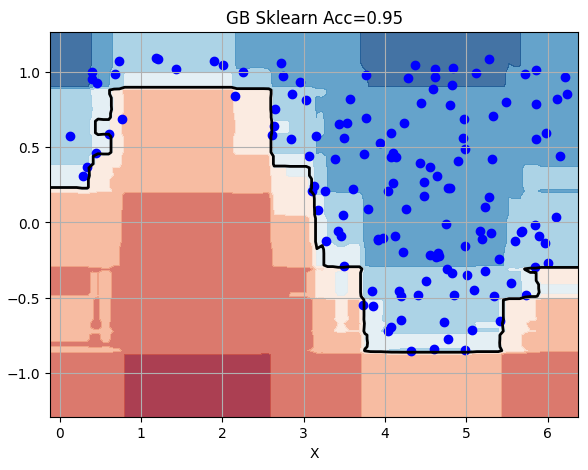
Gradient Boosting Implementation
This project features an implementation of the Gradient Boosting algorithm, an ensemble method that combines multiple decision trees (stumps). It utilizes gradient descent optimization to minimize the loss function. The collective contributions of all weak models (stumps) result in a robust predictive model.
Multiple Object Tracking for Video Sequences
Python PyTorch Computer Vision
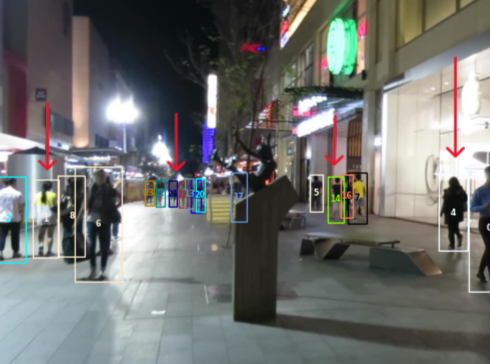
Multiple Object Tracking for Video Sequences
This project addresses the task of multiple object tracking (MOT), specifically focusing on tracking people walking in video sequences. The base model for detection and tracking is enhanced using advanced techniques to improve performance. The dataset used is MOT16, which contains various scenarios for individual detection.
Analysis of Emotions in Classic Novels
Python WordNet Beautiful Soup Natural Language Processing (NLP)
Analysis of Emotions in Classic Novels
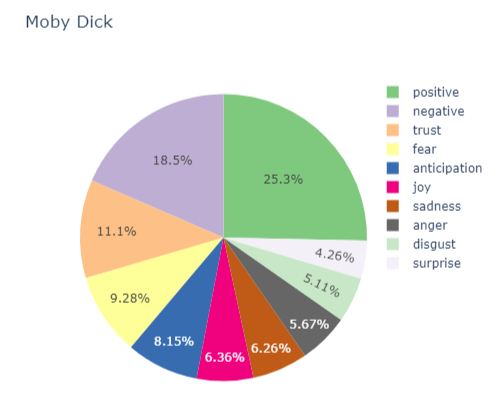
This project uses Natural Language Processing (NLP) to analyze emotions in literary texts from Project Gutenberg, aiming to identify and quantify emotions through advanced NLP methods like sentiment analysis and text information extraction.
Q Learning and SARSA Implementation
Python Reinforcement Learning (RL)
Q Learning and SARSA Implementation
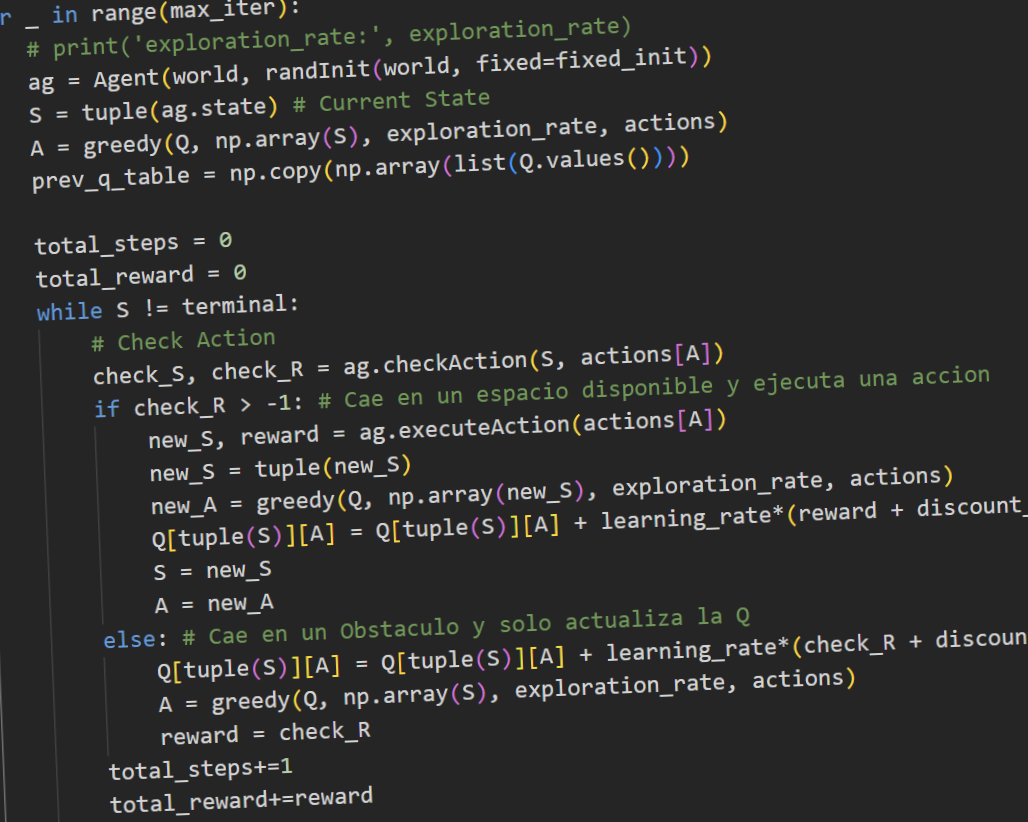
This project demonstrates the implementation of two reinforcement learning algorithms: Q Learning and SARSA. These algorithms are evaluated across various grid world maps to analyze their performance and behavior.
Recommendation: Matrix Factorization and Deep-Learning
Python TensorFlow Keras Recommendation Systems
Recommendation: Matrix Factorization and Deep-Learning
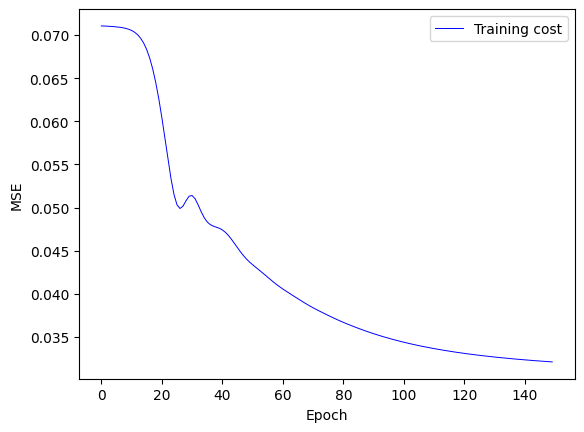
This project demonstrates collaborative filtering on the movie ratings dataset using matrix factorization combined with neural networks.

Get in Touch

My inbox is always open. Whether you have a question or just want to say hi, I’ll try my best to get back to you!